


Reusable IBCs for chemical distributors
Chemical distributors need more than a reusable container. VARIBOX packaging, suitable customer connections, returns and an agreed service programme are all part of an effective recurring supply model.


Safer

Reusable

Sustainable
A reusable packaging platform for chemical distributors
Chemical distributors must deliver a package that matches the chemical, can be handled at the customer’s facility and is supported by a practical collection and servicing arrangement. VARIBOX reusable IBCs address that repeated supply model, subject to the actual design approval and operating requirements.

The appropriate package

Customer withdrawal

An organised return loop
The distributor’s reusable packaging loop
01 · Select
Verify the chemical, approval, configuration and customer dispensing conditions.
02 · Deliver
Fill, mark and transport the IBC following the applicable instructions.
03 · Use
The customer positions, connects and empties the IBC using site procedures.
04 · Return
Recover packaging, document its history and arrange inspection and servicing before permitted reuse.
Reuse must be managed on the basis of condition, chemical history and relevant inspection requirements, not simply the number of trips.
Customer applications: distributor experience

Brenntag Química
The Spanish customer story describes the use and upkeep of VARIBOX packaging in chemical distribution.
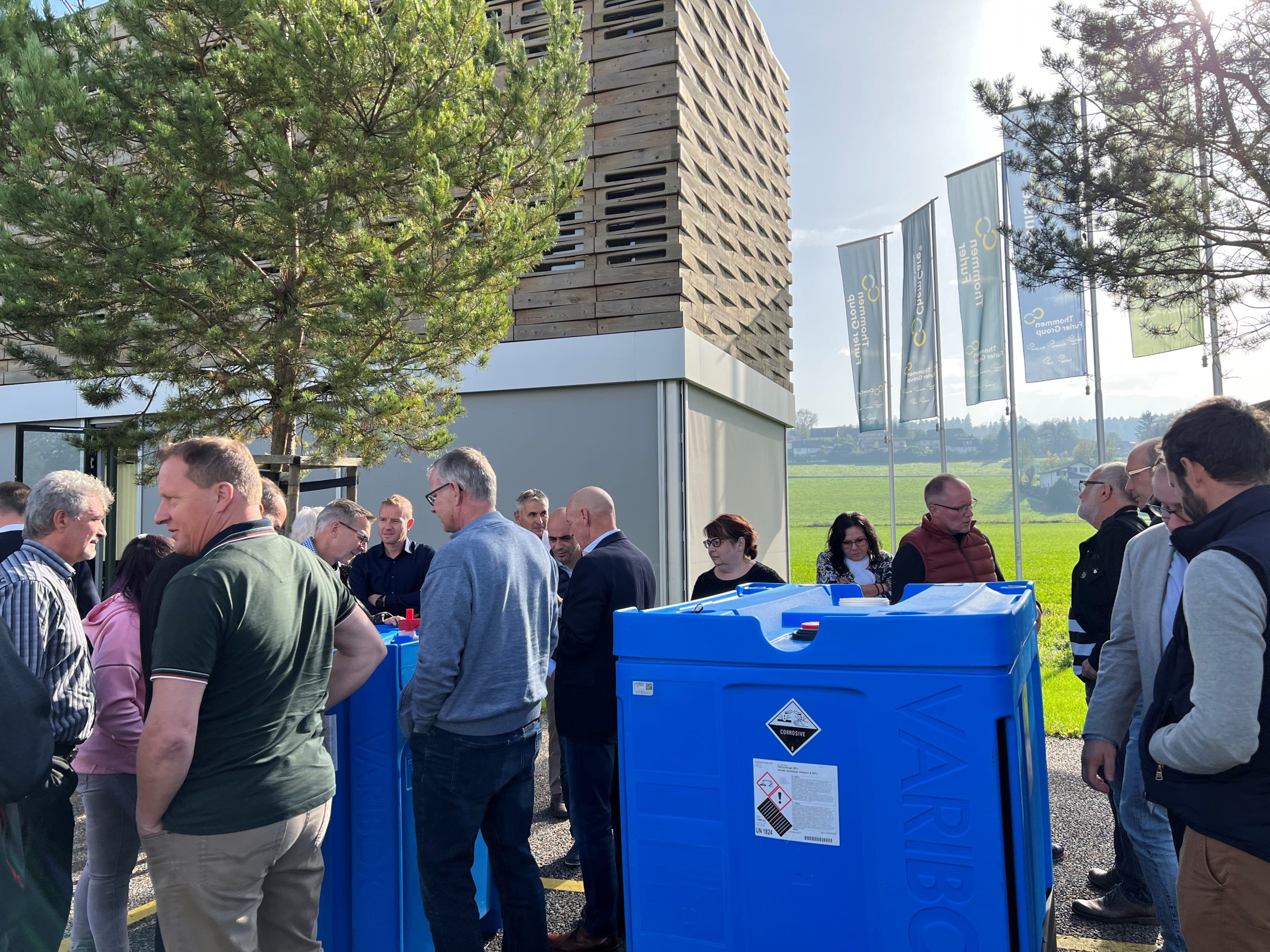
Thommen-Furler
Training shows the importance of knowledge about container construction, handling and suitability.
Different connections, different customer processes
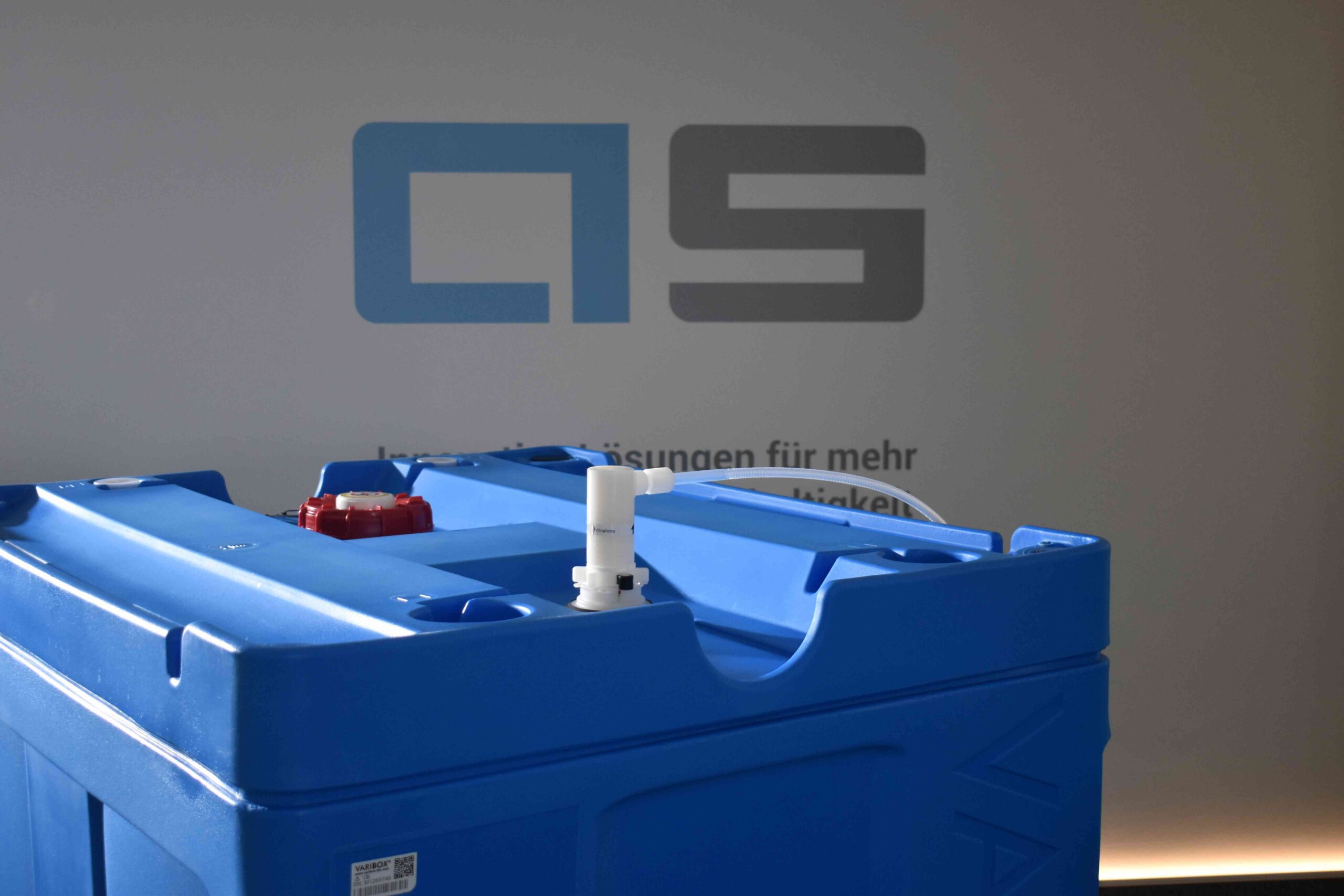
Closed top withdrawal
Compatible extractor tubes and couplers can support a repeatable connection routine; pumps and controls are separate.

Heavy-duty bottom valve
VARIBOX SC uses an outlet valve in its intended configuration. The valve, hose and site arrangements must be verified.
What a distributor should specify before investing
| Part of the service | Key decision |
|---|---|
| Chemical | SDS, classification, compatible container and fittings |
| Customer use | Volume, connection, safety and handling |
| Transport | Current approval, loading and applicable route |
| Return | Collection, identification and maintenance responsibilities |
| Reuse | Inspection, testing and relevant authorised service |
See the general reusable IBC range and the service partner directory.
How VARIBOX can support the distributor
- Choose between Single, Full and Compact Containment formats.
- Assess the appropriate dispensing connection for your customers.
- Discuss supporting product documentation and current approvals.
- Explore a workable packaging return and maintenance programme.
We do not assume a fixed financial return or environmental benefit for every operation. These depend on the actual process, losses, logistics and approved use.
CHEMICAL-DISTRIBUTION MODEL
What makes reusable packaging workable for a chemical distributor?
A distributor’s packaging concept influences filling, transport, the customer’s process and the way the container returns to service. Reuse only works when those steps are connected by a practical agreement and the actual chemical and container remain suitable.
A repeatable, identified fleet
A distributor should be able to identify each IBC, its approved configuration, the product last carried and relevant inspection history. A standard container family may simplify some parts of operation, but it does not remove the need for substance-specific checks, correct marking or service documentation.
An explicit service arrangement
Who collects empty packaging, checks damage, organises the required inspections and authorises the next filling? Who decides whether cleaning is needed? These responsibilities should be clear between distributor, customer and qualified service providers. An empty container should not be reused solely because it looks undamaged.
VARIBOX offers several reusable IBC formats and a network of specialist service information. The actual operating model must be agreed by the organisations using the packaging.
DELIVERY TO END USER
Understand the customer’s withdrawal needs before choosing a model
Two customers receiving the same nominal volume of chemical can have very different dispensing arrangements. One may transfer into a fixed installation while another draws directly from the delivery IBC. Packaging selection should therefore include the process at the point of use.
Top withdrawal application
For a compatible Full or Compact Containment IBC, VARIBOX Safeline can provide a matching extractor tube and coupler. The customer still needs correctly specified external equipment and a safe connection and changeover method. The coupler does not perform metering or make an otherwise unsuitable chemical approved.
Bottom-valve application
VARIBOX Single Containment uses a heavy-duty bottom valve in the intended configuration. That design changes how the customer positions the IBC, accesses the outlet and manages hoses or residual product. The complete site arrangement and substance compatibility must be checked.
A good distributor’s specification links the chemical, customer consumption, handling, outlet and return logistics into one documented decision.
EVIDENCE AND SUPPORT
What VARIBOX customer stories can tell distributors
The existing VARIBOX stories show concrete settings in which chemical-distribution companies use reusable containers. They are useful to illustrate the range of operating models, but their outcomes cannot simply be transferred to another fleet or customer site.
Brenntag and product maintenance
The Brenntag Química story discusses VARIBOX containers in a chemical-distribution operation. It is especially relevant to the practical questions around packaging condition, maintenance and keeping a reusable fleet suitable for continued use.
Thommen-Furler and customer knowledge
Thommen-Furler’s product-training story highlights the importance of understanding the actual IBC design before advising customers. Training and suitable handling procedures are an important part of a repeatable supply programme, alongside the choice of container.
For more detail, see Brenntag Química and Thommen-Furler. The next commercial step is to discuss the intended chemical and the distributor’s specific network.
QUALIFY THE OPPORTUNITY
A practical briefing template for distributor enquiries
Before recommending a reusable IBC fleet, collect a clear description of how chemical packaging moves through the business. This makes a product recommendation more useful than a general sustainability claim.
Product and network
List the liquid types, concentrations and transport requirements, current packaging capacities, delivery routes and customer demands. Identify which sites can handle full and empty IBCs and whether product ranges should be kept in separate, dedicated fleets.
Connection, returns and service
Record the expected filling and withdrawal connections, returns process, condition checks, required testing and servicing responsibilities. Decide who manages damaged units and what happens when containers or components reach the end of their permitted use.
Commercial benefits should be evaluated from the actual operating data rather than presented as a fixed return-per-trip or guaranteed reduction.
Frequently asked questions
Is reusable packaging always cheaper?
No general conclusion can be drawn without the supply-chain facts. A working reuse programme requires returns, inspection and servicing.
Can the same IBC hold different chemicals?
Not automatically. History, compatibility, cleaning, container approval and intended use must be reviewed.
Who maintains the IBC?
Responsibilities must be specified. Authorised service providers and appropriate inspection records are important where required.
What is the benefit of a matching connection?
A properly specified connection can make routine handling more defined, but it cannot remove the need for operating procedures and risk assessment.
Develop a VARIBOX chemical distribution programme
Tell us which chemicals and volumes you distribute, how customers empty the IBCs and what return and service arrangements are available.